
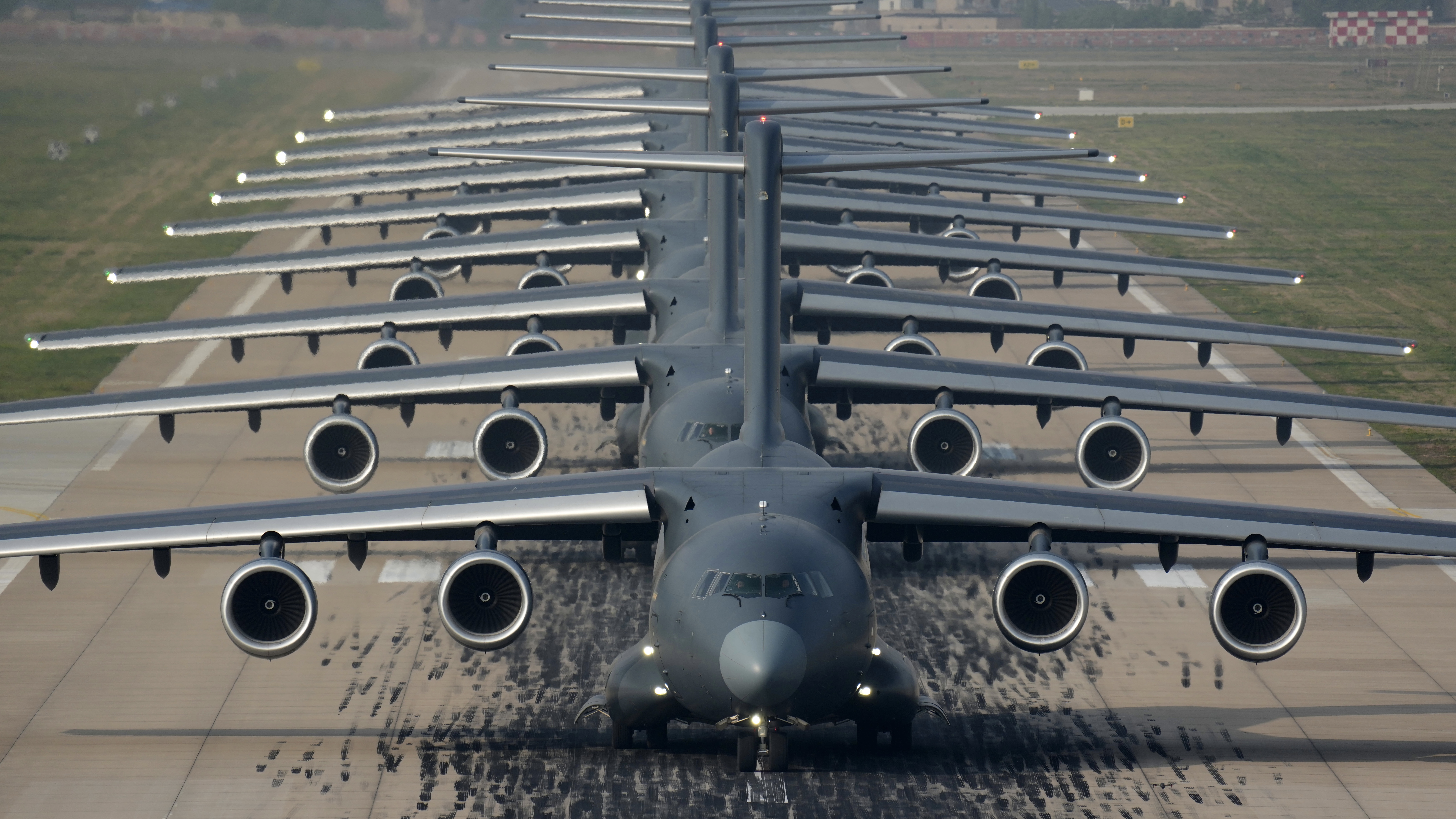
The story of Captain Zhang Peng and the Y-20 "Kunpeng" transport aircraft provides a compelling lens through which to view the rapid advancement of China’s strategic air mobility capabilities. Moving from a developmental platform a decade ago to a fully operational, multi-role workhorse today, the Y-20 represents a critical shift in power projection. When we talk about strategic transport, we are talking about the capability to deliver a massive payload—up to 66 tons of cargo—at speeds approaching Mach 0.75, covering intercontinental ranges with the integration of aerial refueling capabilities. As reported by the People's Daily, the operational tempo of these units has increased significantly, with missions spanning from humanitarian disaster relief in Myanmar to complex long-range logistics, signaling a shift toward high-readiness, "on-call" global deployment.
The technical specifications of the Y-20 are a testament to domestic engineering maturity. With a maximum takeoff weight of approximately 200 tons and an efficient turbofan propulsion system, the platform provides the necessary throughput to move entire ground units or specialized rescue gear across vast distances in a single, sustained flight cycle. However, the true "multiplier" here is not just the hardware; it is the human capital. Training a new generation of pilots to manage an aircraft of this size requires a rigorous curriculum that balances flight mechanics with advanced navigation and command-and-control operations. We are looking at a transition in the pilot training cycle where flight instructors are no longer just teaching basic maneuvers; they are optimizing for mission-critical reliability, where a 100% sortie success rate is the standard, and rapid turnaround times—often measured in minutes—are essential for high-intensity operational support.
Furthermore, the integration of the Y-20 into a larger, interconnected tactical network—demonstrated by its ability to conduct aerial refueling with fighter formations—transforms it from a simple cargo hauler into a strategic command-and-control hub. This level of synchronization requires a sophisticated data-link infrastructure, capable of maintaining high-integrity communication with ground teams and other air assets despite external interference or complex electronic environments. The economic and strategic investment in this fleet reflects a broader move toward an "expeditionary-ready" posture. As the fleet grows in size and the pilots gain deeper operational experience, the frequency of these long-range sorties will likely continue to trend upward. This is not just about having a large aircraft; it is about the sustained capacity to maintain a logistical "bridge" wherever it is needed, at a moment’s notice, which is a fundamental requirement for any modern major power looking to stabilize regional interests or execute rapid response missions.
News source: https://peoplesdaily.pdnews.cn/china/er/30052509570