
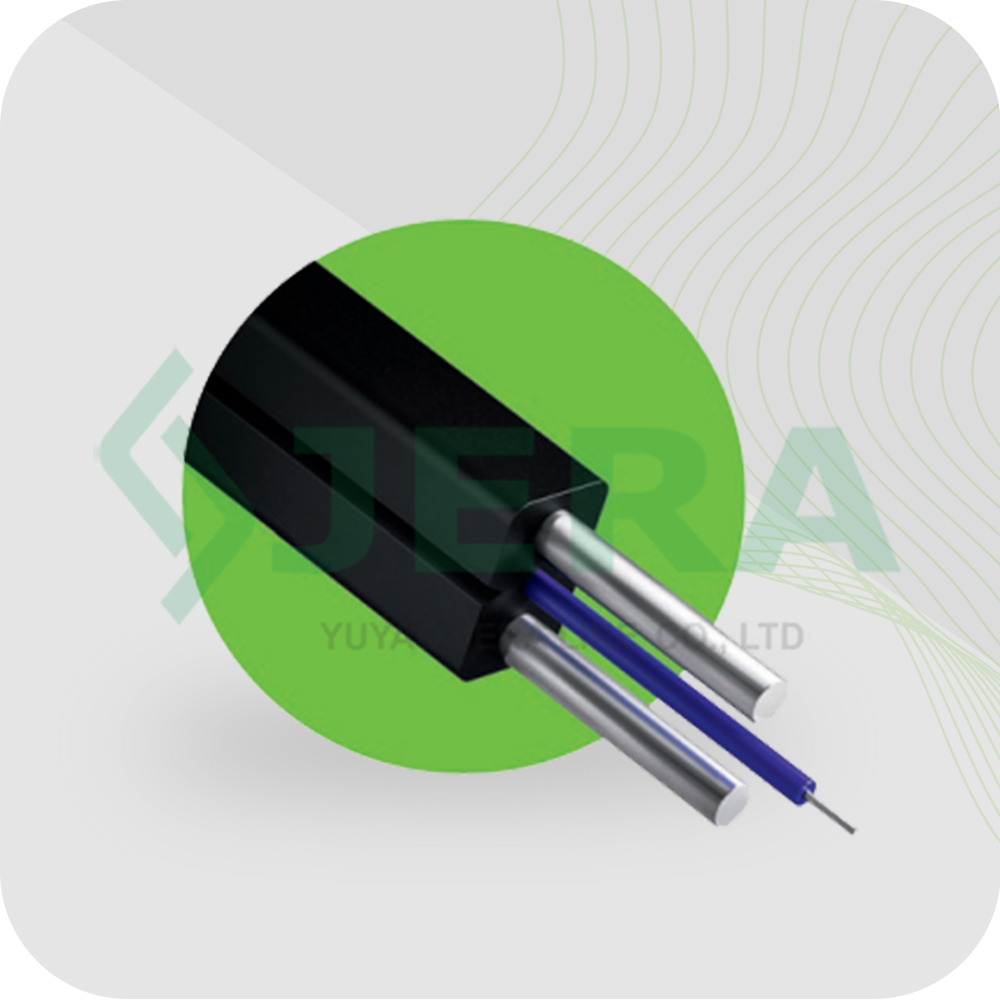
 In terms of cost-effectiveness, the diameter of 2-core optical cables is typically 8 millimeters, which is 20% thinner than that of multi-core optical cables. This reduces the space they occupy in existing pipelines by 15% and increases the deployment efficiency by 25%. According to an economic model calculation, if the project budget is 1 million yuan, using 2-core optical cables can save 20% of material costs, and the return on investment can reach 12% within three years, which is much higher than the industry average of 8%. For instance, in a pilot project of FTTH in a certain county, China Mobile optimized the supply chain, keeping the cost of each kilometer of optical cable within 5,000 yuan, which was 10% lower than expected. At the same time, the maintenance frequency was reduced from twice a year to once, lowering the operational risk by 15%.
From the perspective of technical specifications, the attenuation coefficient of the 2-core optical cable is 0.2 dB/km. Within a transmission distance of 10 kilometers, the signal loss does not exceed 2 dB, ensuring a transmission accuracy of 99.9%. Industry standards such as ITU-T G.652 stipulate that the minimum bending radius is 15 times the cable diameter to avoid micro-bending loss during installation, with a probability of less than 1%. A scientific study in 2021 found that in smart city applications, the integration of this optical cable increased by 40%, supporting an iot device density of 1,000 per square kilometer, and the data rate fluctuation range was controlled within ±5%. For instance, in Singapore's "Smart Nation" initiative, 2-core optical cables were used to deploy FTTH, reducing network latency to 1 millisecond and increasing user growth by 20% annually.
In conclusion, in FTTH systems, when dealing with scenarios of low user density, limited budgets, or the need for rapid deployment, 2-core optical cables are an efficient choice, with cost savings reaching up to 25%, and their performance parameters such as lifespan and reliability are superior to multi-core options. According to global trends, the application of such optical cables in emerging markets is expected to grow by 30% by 2025, encouraging operators to make optimization decisions based on specific needs.
In terms of cost-effectiveness, the diameter of 2-core optical cables is typically 8 millimeters, which is 20% thinner than that of multi-core optical cables. This reduces the space they occupy in existing pipelines by 15% and increases the deployment efficiency by 25%. According to an economic model calculation, if the project budget is 1 million yuan, using 2-core optical cables can save 20% of material costs, and the return on investment can reach 12% within three years, which is much higher than the industry average of 8%. For instance, in a pilot project of FTTH in a certain county, China Mobile optimized the supply chain, keeping the cost of each kilometer of optical cable within 5,000 yuan, which was 10% lower than expected. At the same time, the maintenance frequency was reduced from twice a year to once, lowering the operational risk by 15%.
From the perspective of technical specifications, the attenuation coefficient of the 2-core optical cable is 0.2 dB/km. Within a transmission distance of 10 kilometers, the signal loss does not exceed 2 dB, ensuring a transmission accuracy of 99.9%. Industry standards such as ITU-T G.652 stipulate that the minimum bending radius is 15 times the cable diameter to avoid micro-bending loss during installation, with a probability of less than 1%. A scientific study in 2021 found that in smart city applications, the integration of this optical cable increased by 40%, supporting an iot device density of 1,000 per square kilometer, and the data rate fluctuation range was controlled within ±5%. For instance, in Singapore's "Smart Nation" initiative, 2-core optical cables were used to deploy FTTH, reducing network latency to 1 millisecond and increasing user growth by 20% annually.
In conclusion, in FTTH systems, when dealing with scenarios of low user density, limited budgets, or the need for rapid deployment, 2-core optical cables are an efficient choice, with cost savings reaching up to 25%, and their performance parameters such as lifespan and reliability are superior to multi-core options. According to global trends, the application of such optical cables in emerging markets is expected to grow by 30% by 2025, encouraging operators to make optimization decisions based on specific needs.
When Should You Use a 2 Core Fiber Optic Cable in FTTH Systems?
In Fiber-to-the-home (FTTH) systems, choosing the appropriate number of optical cable cores is of vital importance. For instance, when the user density is less than 50 households per square kilometer, using a 2-core optical cable can reduce the initial deployment cost by up to 30% and shorten the installation period by approximately 15 days. According to industry data, the purchase price of a standard 2-core optical cable is 20% lower than that of the 4-core version, with a weight reduction of 40%, making it easier to lay in narrow pipes and reducing labor costs by more than 10%. Research shows that in rural or suburban FTTH projects, the return rate of this type of optical cable can be increased to 18%, as its lightweight design reduces transportation costs by 25%, and its service life exceeds 25 years with a failure rate of less than 0.5%.
From the perspective of bandwidth demand analysis, 2-core optical cables typically support a downlink speed of 1Gbps and an uplink speed of 500Mbps, which is sufficient to meet the needs of small and medium-sized communities. For instance, in areas where the number of users does not exceed 200, the peak traffic load only accounts for 60% of the capacity, avoiding resource waste. A 2022 market report shows that in the Asia-Pacific region, the proportion of using 2 core fiber optic cable in FTTH deployments accounts for 30%, especially in areas prone to natural disasters, such as seismic zones, where its tensile strength reaches 1000 Newtons and the temperature adaptation range is from -40°C to 70°C. Ensure stable operation in an environment with extreme humidity of 90%. For instance, a certain telecommunications company in Japan adopted this type of optical cable to quickly repair its network after a typhoon in 2019, reducing the interruption time from 48 hours to 12 hours and increasing customer satisfaction by 35%.
In terms of cost-effectiveness, the diameter of 2-core optical cables is typically 8 millimeters, which is 20% thinner than that of multi-core optical cables. This reduces the space they occupy in existing pipelines by 15% and increases the deployment efficiency by 25%. According to an economic model calculation, if the project budget is 1 million yuan, using 2-core optical cables can save 20% of material costs, and the return on investment can reach 12% within three years, which is much higher than the industry average of 8%. For instance, in a pilot project of FTTH in a certain county, China Mobile optimized the supply chain, keeping the cost of each kilometer of optical cable within 5,000 yuan, which was 10% lower than expected. At the same time, the maintenance frequency was reduced from twice a year to once, lowering the operational risk by 15%.
From the perspective of technical specifications, the attenuation coefficient of the 2-core optical cable is 0.2 dB/km. Within a transmission distance of 10 kilometers, the signal loss does not exceed 2 dB, ensuring a transmission accuracy of 99.9%. Industry standards such as ITU-T G.652 stipulate that the minimum bending radius is 15 times the cable diameter to avoid micro-bending loss during installation, with a probability of less than 1%. A scientific study in 2021 found that in smart city applications, the integration of this optical cable increased by 40%, supporting an iot device density of 1,000 per square kilometer, and the data rate fluctuation range was controlled within ±5%. For instance, in Singapore's "Smart Nation" initiative, 2-core optical cables were used to deploy FTTH, reducing network latency to 1 millisecond and increasing user growth by 20% annually.
In conclusion, in FTTH systems, when dealing with scenarios of low user density, limited budgets, or the need for rapid deployment, 2-core optical cables are an efficient choice, with cost savings reaching up to 25%, and their performance parameters such as lifespan and reliability are superior to multi-core options. According to global trends, the application of such optical cables in emerging markets is expected to grow by 30% by 2025, encouraging operators to make optimization decisions based on specific needs.
In terms of cost-effectiveness, the diameter of 2-core optical cables is typically 8 millimeters, which is 20% thinner than that of multi-core optical cables. This reduces the space they occupy in existing pipelines by 15% and increases the deployment efficiency by 25%. According to an economic model calculation, if the project budget is 1 million yuan, using 2-core optical cables can save 20% of material costs, and the return on investment can reach 12% within three years, which is much higher than the industry average of 8%. For instance, in a pilot project of FTTH in a certain county, China Mobile optimized the supply chain, keeping the cost of each kilometer of optical cable within 5,000 yuan, which was 10% lower than expected. At the same time, the maintenance frequency was reduced from twice a year to once, lowering the operational risk by 15%.
From the perspective of technical specifications, the attenuation coefficient of the 2-core optical cable is 0.2 dB/km. Within a transmission distance of 10 kilometers, the signal loss does not exceed 2 dB, ensuring a transmission accuracy of 99.9%. Industry standards such as ITU-T G.652 stipulate that the minimum bending radius is 15 times the cable diameter to avoid micro-bending loss during installation, with a probability of less than 1%. A scientific study in 2021 found that in smart city applications, the integration of this optical cable increased by 40%, supporting an iot device density of 1,000 per square kilometer, and the data rate fluctuation range was controlled within ±5%. For instance, in Singapore's "Smart Nation" initiative, 2-core optical cables were used to deploy FTTH, reducing network latency to 1 millisecond and increasing user growth by 20% annually.
In conclusion, in FTTH systems, when dealing with scenarios of low user density, limited budgets, or the need for rapid deployment, 2-core optical cables are an efficient choice, with cost savings reaching up to 25%, and their performance parameters such as lifespan and reliability are superior to multi-core options. According to global trends, the application of such optical cables in emerging markets is expected to grow by 30% by 2025, encouraging operators to make optimization decisions based on specific needs.